 Global Fuel Calculator
Fuel Consumption Calculator — L/100km, km/L and Fuel Usage
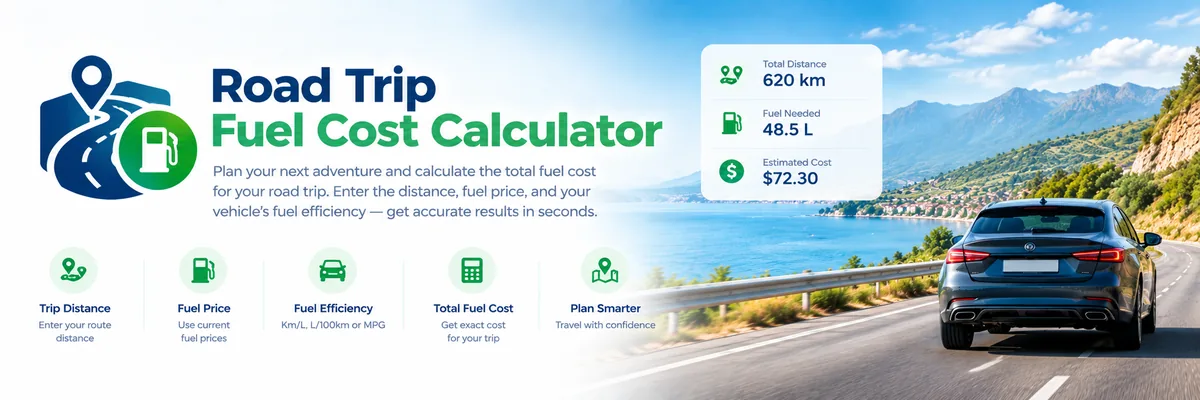
This fuel consumption calculator turns two numbers — distance traveled and fuel used — into a complete picture of your vehicle’s fuel usage: L/100km, km/L, US MPG and imperial MPG all at once, plus fuel cost per km and per mile. It is built for any vehicle, from a city hatchback to a motorcycle, and works the same way regardless of which units your odometer or fuel pump uses.
Fuel consumption and fuel economy are the same underlying figure looked at from opposite ends: consumption asks how much fuel a fixed distance costs you, economy asks how far a fixed amount of fuel takes you. Because different countries default to different answers to that question, this calculator computes every standard from one input rather than making you convert by hand.
Work out your numbers
Common questions
How do I calculate fuel consumption?
Fill the tank, reset the trip meter (or note the odometer), drive normally for a tank, then fill up again to the same cut-off point. Divide the litres it took to refill by the kilometres on the trip meter, then multiply by 100 — that is your L/100km. This calculator does that arithmetic for you and shows km/L and MPG from the same numbers.
How do I calculate km per litre?
Divide the kilometres you drove by the litres of fuel you used. Two hundred and forty kilometres on twenty litres is 240 divided by 20, which is 12 km/L. It is the reciprocal of L/100km scaled by one hundred, so the calculator shows both from a single entry.
How do I calculate my fuel consumption per kilometer?
That is L/100km worked the other way around: litres used divided by kilometres driven, multiplied by 100. A vehicle using 8 litres over 100 km is consuming 0.08 litres per kilometre — the calculator displays this as 8 L/100km, which is the more commonly read form of the same figure.
How do I calculate cost per km?
Divide your total fuel cost for a trip by the distance covered. This calculator does it automatically: enter your price per litre or gallon alongside distance and fuel used, and cost per kilometre and cost per mile appear in the results alongside your consumption figures.
Does this work for diesel and CNG as well as petrol?
Yes. The arithmetic does not care what the fuel is — only how much of it you used and what it cost. Diesel, petrol and CNG (entered by weight rather than volume) all produce a correct result.
What is a normal fuel consumption figure?
It depends heavily on the vehicle and how it is driven. A small hatchback in mixed driving often sits in the 6 to 8 L/100km range; a larger SUV can be well into the teens. Rather than chasing a universal number, track your own figure over a few tanks and treat a sustained rise as a signal to check tyre pressure, air filter and driving style.